Fire Your Relatives. Scare Your Employees. And Stop Whining – So Says George Cloutier
Have you ever heard of George Cloutier? Me neither, until I ran across an article on the New York Times website today whe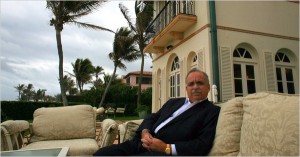 re an interview was published with the author of, “Profits Aren’t Everything, They’re the Only Thing” and the founder of American Management Services. After reading the article, I wanted to ask Mr. Cloutier, if profits are everything, where does social responsibility, worker well-being, and work-life balance fit into the mix? Or do they?
Mr. Cloutier advises to put profits above all, shock your laggard employees, and always pay yourself first. He claims to be challenging conventional wisdom about how companies should operate, but from what I’ve gathered his strategy employs the kind of mentality that got us into this economic mess, and is nothing but conventional.
One of Cloutier’s suggestions is to, instead of paying vendors on time, pay them late to increase cash flow. Wherever did he come up with this idea? Honestly, this is the oldest trick in the book and if a company isn’t doing it, it’s because they don’t want to screw over their vendors and damage a relationship.
Anyway, Here are a few excerpts from the article.
Q. You tell business owners to forget about being likable. Is there something wrong with employees liking you?
A. You have to treat your people with respect. If they have a personal problem, you have to help them through it. You have to follow the law. But we also need to get things done as asked. The abandonment of that principle is a large factor in the failure of small businesses to achieve real profitability.
Q. What’s your view of fear as a management tool?
A. Fear is the best motivator.
Q. You say no owner should be satisfied with his business. What dissatisfies you about yours?
A. I feel that I should triple the size of the business over the next 10 years because I’m getting old. I’m a little dissatisfied we haven’t done that. I semi-retired for about five years and that was probably something I won’t do again. They’re going to carry me out of here in my shoes.
I really hate to see this behavior encouraged by a Harvard educated management consultant like Mr. Cloutier who may hold significant credibility in professional circles. For him to say that fear is a great motivator is absurd. Why doesn’t he just throw guilt and shame in there to pull a trifecta of manipulative and cowardly management methods. But was he successful? Yes, he started a company that grew to 150 employees. But at what price?
Not everything that Mr. Cloutier said made me cringe. I thought he made some good points about sound financial management and not getting yourself too far into a hole. However, his fist-pounding tyrant-like style is what we are trying to move away from and just increases anxiety among employees. There is one thing of which I am nearly certain, anxiety leads to unhealthy, and unhappy lives. However, fear will drive short term behavior and if you want to see short term result you can certainly use it to get some reaction.
I prefer a method that focuses on long-term sustainability and while this may not be as gratifying in the short term, it can produce a healthy, and yes, profitable organization. Does this allow for poor financial mismanagement? Absolutely not, but it does not require fist-pounding, and noose tightening to generate results.
Tags: Construction blog, Construction Economics, George Cloutier, John Poole, management, management in construction


I think your being disingenuous if you don’t acknowledge a certain amount of fear is necessary in management. If there are no bad consequences, complacency almost always occurs. I’m not a fan of guilt and shame (which you add), but some fear works.
It’s much more important to be respected rather than to be liked.
I disagree… the most produtive environments I have worked in had nothing to do with fear or consequences. We had good leaders, and selected good employees. It comes down to the leaderships ability to create productive environments. This sort of syndrome comes froms a lack of creativity and understanding of people in upper management and is very common. You want productive employees, show them appreciation regularly and celebrate their achievements. It’s a political work of art.
Obviously you can’t have employees sitting around all day with their feet on their desk and not expecting to get fired. However, I think the better situation is where employees are engaged to the point where they don’t want to sit around with their feet on their desk and they want to perform at their highest level because of the satisfaction it brings.
Why do people do things that don’t pay them anything, like climbing a mountain or playing in amateur tennis tournaments?