What The Frack Is Going On?
I didn’t know much, if anything, about fracking until about three months ago when I downloaded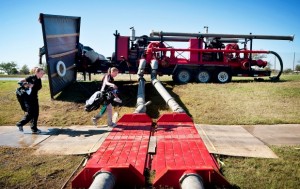 a podcast of This American Life that explored the issue and then specifically looked into two professors who had conflicting opinions about the benefits of fracking. After listening to the podcast, I came to the brilliant acertion that the whole thing is totally fracked up.
One of the professors from Penn State, in this NPR tale of good vs. evil, calculated the large amount of natural gas in the Marcellus Shale deep beneath the surface of Pennsylvania, Maryland, New York, and West Virginia and presented his admirable findings with pride to the administration of his University.
The other professor from the University of Pittsburg did a calculation of the amount of toxic chemicals used in the hydraulic fracturing process that could be polluting ground water, streams, rivers, and eventually making its way into drinking water.
One of these professors received wide acclaim and praise for his work, the other ended up out of a job.
I starting trying to gather facts about fracking (I guess you could call them fracks). The funny thing is that facts (fracks) are rather few and far between. It doesn’t seem that anybody really knows if fracking is safe, dangerous, good, or bad. However, this much we do know, fracking is big money. It’s big money for drilling companies, but it’s also very lucrative for owner’s of land with gas underneath. We also know that the fracking practice was exempted from the Safe Drinking Water Act despite knowing that the fluids used to fracture the rock contain many toxic chemicals including known carcinogens.
Pennsylvania is sometimes described as Pittsburg and Philadelphia with Alabama in between. In short, there are some depressed towns in central Pennsylvania and natural gas drilling has transformed these places. The gas industry has brought money, luxuries, and to many of these people – hope. But at what cost? The word is very mum on that one.
I’m honestly kind of torn about the issue. I tend to knee jerk to the side of the environmentalists in situations like this, but I can also see the need for quality domestic energy and a decreased reliance on foreign oil.
However, I do want to make sure we are dealing with the correct information before we rush to judgment. For example, the drilling and gas companies cry from the mountaintops about how natural gas is so clean burning and a non-contributor to climate change. This is not true. While natural gas does burn cleaner and with less impact to climate change, the extraction process releases natural gas into the atmosphere which is a tremendous contributor to climate change, so the net effect is not much better than burning oil or coal. Sorry, but gas companies didn’t quite hit the mark on that one.
I guess I’m just an advocate of full disclosure of information and having smart people make good choices based on lots and lots of accurate information. That’s all. So when the EPA asked the drilling companies to disclose all the chemicals used in fracking fluids and they said, “No”, that kind of ticked me off.
Hopefully we’re not fracked on this one.


Fracking has been used in the oil and Gas industry for many years and there have been no known instances where groundwater has been contaminated except through accidents. The process water is 99% water and sand and the “chemicals” are to make the water and sand mix flow better. Once the frack is done the water flows back to a pit where it is disposed of either to a disposal well or a processing plant. The wells are typically a mile deep and sealed in steel and cement so the ability of frack water to leak is slim and none.
What the FRACK?
It should be known that the merits and demerits of any new form of extraction are always under scrutiny by both regulators and the public.
Today we all worry about global warming, but in the 70’s the main topic regarding climate change was global cooling and the next coming ice age.
Although it’s tough to imagine giving credit to industry for being socially responsible, you also have to know that they ultimately try to avoid litigation. They hire the best scientists to make the most effective mixtures for both the environment and the purpose.
Hopefully there is a way to achieve both low cost extraction and low cost resources from US sources.
The fact that the oil companies won’t disclose the chemicals used in fracking might lead one to think that they’re trying to hide something. Hmm. You think?
Also, if fracking is so safe, then why did the oil companies get legislation passed that exempts them from having to meet the requirements of the Clean Drinking Water Act?
High Vis Clothing