Learning Engineering Through Gaming
Cary Betagole authored this post with the backing of Big Fish Games, where you can download games like virtual city, Super Smash Flash 2 game and farm frenzy. Accessible from over 150 countries, Big Fish Games believes that online games can help make even the most rigorous of disciplines, like engineering, more down-to-earth and easily related.
If parents ever thought their kids are wasting their time playing video games all day and all night, they might want to think again. More and more video games are finding their way into the class rooms of secondary schools and colleges. The use of these games can assist in turning complex engineering concepts and principles into visually stimulating activities and fun ways to learn.
One of the disadvantages of teaching from a textbook is the limited interaction between the student and the concepts they are studying. It is one thing to read about high level mathematical calculations such as numerical techniques for calculating derivatives, but it is quite another to put the information into a video game and see what happens.
Using a video game to practice calculations allows the student to see the outcome of their work. If you’re plugging your calculations into a race car video game and those calculations are not correct, you will see your car crash out of control into a fiery heap. Without the video game, your incorrect calculations would only bring you paper ripped from being erased too many times, and where is the fun in that?
While playing with video games is certainly fun, being in them is even more exciting. New tools are being developed to stimulate students visually. New software is being used to document the student’s movements. Those movements are then put into the program. Once there, the students will be able to interact with the learning tool visually and physically.
They will be able to “step” into the virtual learning environment. In the case of bioengineering, they can grab a virus with their hands or kick bacteria and experience what happens. This virtual world will give them the ability to connect with the concepts they are learning in a way that until now has never been possible. They can explore DNA from the inside out in a virtual world instead of simple pictures in a textbook.
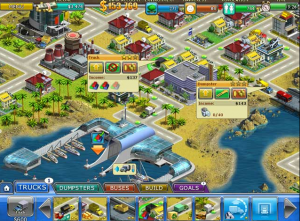
For example, virtual City is a game played with the purpose of constructing the next great city. To achieve success, it’s important to consider a city’s needs: hospitals, industry, residential housing, and the like. It’s the player’s job to manage and implement these features so that the city runs smoothly. But be warned, you must be ready for the unpredictable. Sound construction practices will bode well in case of an economic downturn or a natural disaster.
Keeping students engaged in the classroom has always been a struggle for teachers. With new technology in the student’s daily lives, the challenge to keep them engaged has become even more difficult. The interactive aspect of these video games and new software will go a long way in the challenge of engaging students and making learning easier, get more info at www.casinodames.com
Engineering has never been an easy course of study. Students have struggled throughout time learning the principles. In today’s world of ever changing technology, the introduction of video games and interactive learning might just be the key to helping students keep up with the demands of the fast paced environment of engineering. They might also have a little fun while they are at it.


I’ve been saying for years that education should take advantage of video games as a way of learning. I wasn’t even thinking of engineering or science, though I agree that is an awesome idea. I was thinking more of history, with games like Civilization and the like. You could easily structure a game like that to teach history in a much more engaging way.
Hi Cary, this article is really interesting! I recently read an article (I think in Newsweek) about how our brains are being rewired by technology; so it makes sense that we would also need to change the way young people are learning to accommodate thought process changes.